The Myth of Work-Life Balance for Builders
Every productivity guru has the same sermon: work-life balance. Eight hours of work, eight hours of sleep, eight hours of life. Perfectly divided, like a pie chart designed by someone who’s never built anything.
The short answer: work-life balance is advice for maintainers, not builders. Building something real beside a job runs in seasons — intense for a stretch, lighter after — not in perfectly equal days. The goal isn’t balance every day; it’s a life that stays sustainable across years.
Here’s my problem with that: it’s advice for maintainers, not builders.
I spent years at Grameenphone, Pathao, and FrontStory working full-time while building Superpreneur Bangladesh in the evenings. If I’d followed the balance gospel, Superpreneur wouldn’t exist. The channel, the framework, the community — none of it. Because “balance” would have told me my evenings belonged to “life,” not to building.
Let me be clear about what I’m actually saying.
What "Balance" Really Means
“Work-life balance” assumes your work is a tax on your life — something that drains you, which you then recover from during your “life” hours. For a lot of jobs, that’s true. If your job is draining, you absolutely need protected recovery time.
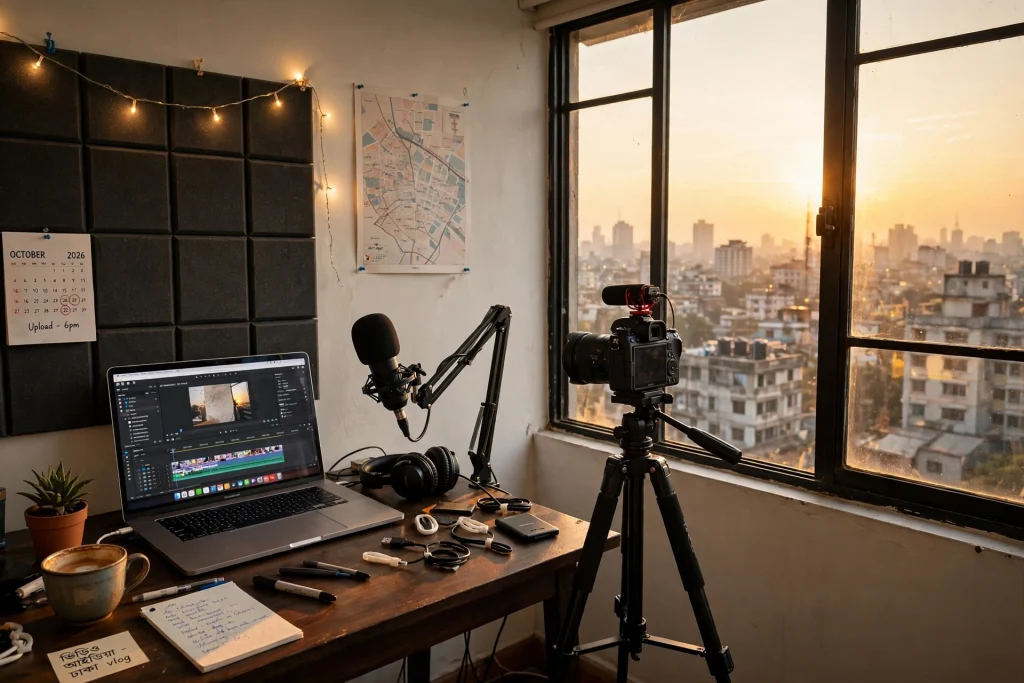
But building something of your own isn’t like that. When I sat down at 9 PM to script a video or outline the Salary to Second Income framework, I wasn’t “working extra.” I was doing the most alive-feeling thing in my day. My full-time job paid the bills. Building paid my soul.
That’s the category error in balance advice: it puts “building your own thing” in the “work” bucket. It belongs in a third bucket — one most people never name.
The Three Buckets
Forget work vs. life. There are three buckets:
1. The Job. Pays the bills. Often draining, sometimes satisfying. You protect it because rent is due and families depend on you. I’m not anti-job — I worked full-time for years and I’m grateful for what those jobs taught me.
2. The Build. Your side project, your content, your product. It’s “work” in the effort sense but “life” in the meaning sense. It gives energy more than it takes it.
3. The Rest. Sleep, family, friends, idleness. The part that’s genuinely restorative.
The balance gurus lump bucket 1 and bucket 2 together as “work” and tell you to cap them. But bucket 2 doesn’t need capping the same way — it needs protecting. The danger isn’t that you’ll build too much. The danger is that guilt from balance preaching will make you stop building altogether.
The Guilt Is Manufactured
Here’s what actually happens to builders: you spend an evening recording a video instead of watching Netflix, and then you feel guilty. Not because anything suffered — your family is fine, your job performance is fine — but because some voice says “you’re out of balance.”
That voice is lying to you. You didn’t steal from your life. You invested in it.
I want to be honest: there were seasons where I overdid it. Where I slept too little and it showed. Balance advice isn’t 100% wrong — it’s wrong about the diagnosis. The problem was never “too much building.” The problem was “too little sleep.” Those are different problems with different fixes.
Seasons, Not Balance
Here’s what I actually believe: you don’t need balance. You need seasons.
There are seasons for building hard — when an idea is hot, when momentum is real, when the energy is there. And there are seasons for rest — when you’re empty, when family needs you, when the tank is dry.
During my full-time years, I built in bursts. A month of intense video production. Then a quieter month. A week where I wrote every evening. Then a week where I didn’t touch anything.
This seasonal rhythm accomplished more than any rigid “balanced schedule” would have. Balance demands mediocrity across all buckets simultaneously. Seasons let you be excellent in one bucket at a time.
What to Actually Optimize
If not balance, what? Three things:
1. Sleep is non-negotiable. This is the one “balance” principle I’d keep. Sleep-deprived building produces garbage and burns you out. I learned to end at midnight, not 3 AM. The work survives. The all-nighters don’t produce anything worth the cost.
2. Presence, not hours. My family didn’t need me home for X hours per evening. They needed me present for the hours I was there. Two focused hours with family beats four distracted ones. Same with building — one focused hour of deep work beats three hours of half-attention.
3. Energy accounting. Track your energy, not your time. If building energizes you, it’s not the same kind of “work” as your job. Budget for energy, not hours. Spend energy where it compounds.
The Real Question
Nobody on their deathbed wishes they’d watched more Netflix in the evenings. And nobody wishes they’d built more at the cost of their health and relationships.
The question isn’t “work or life.” The question is: what is the highest use of this evening?
Sometimes the answer is rest. Sometimes it’s family. And sometimes — often, for builders — the answer is building the thing that might change your life.
Stop feeling guilty about the third answer. It’s not imbalance. It’s intention.
Related reading:
- What Building Superpreneur Bangladesh Cost Me
- Why I Built Superpreneur Bangladesh: My Origin Story
- From Employee to Authority: My 5-Year Playbook
Watch: More on building with a day job on the Superpreneur Bangladesh YouTube channel.