What Building Superpreneur Bangladesh Cost Me
Everyone talks about what building something gives you. Freedom. Income. Impact. Let me talk about what it costs. Because if you’re thinking of building something, you deserve the full picture — not just the highlight reel.
This is the most personal thing I’ve written. Here’s the honest accounting.
The short answer: building Superpreneur Bangladesh cost me real money, evenings, comfort, and a few illusions — and I’d pay it again. Nobody shows you the invoice before you start, so here is mine, honestly itemised.
The Money
Let’s start with the obvious. Building Superpreneur Bangladesh cost real money:
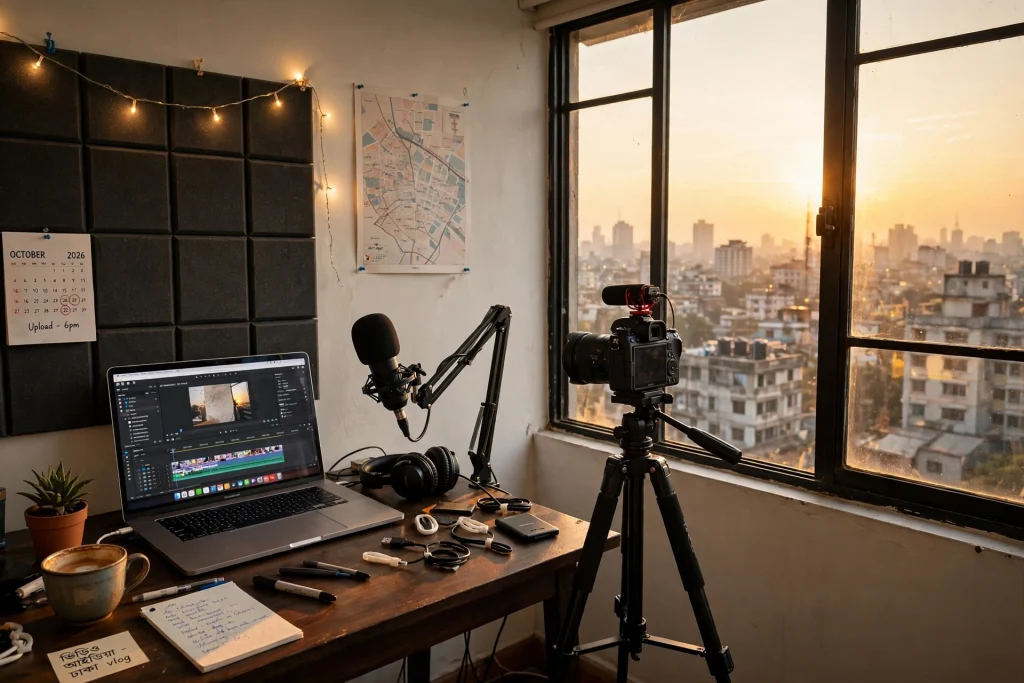
- Equipment: Camera, microphone, lighting, laptop upgrades — roughly ৳80,000-100,000 over the years. Not all at once, but it adds up.
- Software and tools: Editing software, website hosting, domain renewals, email tools — roughly ৳3,000-5,000 per month ongoing.
- Learning: Courses, books, conferences — I invested in my own education continuously. Roughly ৳50,000+ over the years.
- Opportunity cost: The biggest invisible cost. Every hour spent on Superpreneur was an hour not spent on freelance clients, overtime, or rest.
Total direct spend? Probably ৳200,000-300,000 over several years. Not enormous, but not nothing — especially on a Bangladeshi salary.
Was it worth it? Financially, eventually yes. But for the first two years, it was pure cost with zero return. You need to be honest with yourself about whether you can sustain that.
The Time
This is the cost nobody calculates properly.
I estimate I’ve spent 2,000+ hours building Superpreneur Bangladesh. That’s:
- Evenings after full-time work (8 PM to midnight, regularly)
- Weekends sacrificed
- Holidays spent editing instead of resting
- Commute time used for planning and learning
2,000 hours is a full working year. I gave a year of my life to this — spread across evenings and weekends, so it felt less dramatic, but the math doesn’t lie.
The time cost has a shadow: everything I didn’t do. Books not read. Skills not learned. Relationships not nurtured as deeply as they deserved. Rest not taken.
You can’t get time back. Every hour invested is an hour permanently spent. Make sure the investment is worth it.
The Sleep
For about 18 months, I regularly slept 5-6 hours. Work until midnight, up at 6 AM for the day job, repeat.
Chronic sleep deprivation doesn’t feel dramatic day-to-day. You adapt. You drink more tea. You tell yourself it’s temporary.
But it compounds. My focus deteriorated. My patience thinned. I got sick more often. My creativity — the exact thing I needed for content — suffered.
I don’t recommend this. If I could redo it, I’d protect sleep ruthlessly and accept slower growth. The content you make while exhausted isn’t your best work anyway.
Lesson: sustainable pace beats heroic sprints. I learned this the hard way.
The Relationships
This is the cost I didn’t expect.
When you’re building something on top of a full-time job, something has to give. For me, it was social life. I declined invitations. I missed family events. I was physically present but mentally drafting video scripts.
My closest people understood — mostly. But understanding isn’t the same as not feeling the absence. There were tensions. There were conversations I should have had earlier about boundaries and priorities.
I’m not saying building something ruins relationships. I’m saying it strains them, and you need to be intentional about protecting what matters. I wasn’t always intentional enough.
The Identity Crisis
About a year in, I hit a wall that wasn’t about time or money. It was about identity.
“Who am I doing this for? Do I even want this? What if I’m just performing ambition for an audience?”
Building in public creates a peculiar pressure. You’ve told everyone you’re building something. Quitting feels like public failure. So you continue — but are you continuing because you want to, or because you announced it?
I had to sit with this honestly. The answer, for me, was that I genuinely cared about the mission — helping Bangladeshi job holders build second income. But I had to separate the mission from the ego. The mission was real. The need for validation was the part that needed examining.
Not everyone faces this. But if you build publicly, be prepared for the moment when you question everything.
The Opportunity Costs
While building Superpreneur, I said no to:
- Higher-paying job offers (couldn’t take on more work hours)
- Freelance clients (no bandwidth)
- A potential business partnership (wrong timing)
- Simply… resting
Some of these were the right calls. Some I wonder about. You’ll never know the road not taken. That’s the nature of commitment — choosing one path means not choosing others.
What I Gained (The Other Side)
I’ve focused on costs, but honesty requires the full picture. Here’s what it gave me:
- Skills I couldn’t have learned any other way — video, writing, marketing, teaching, business
- An audience of people who trust me
- A body of work I’m proud of
- Options I didn’t have before — income streams, opportunities, independence
- Self-knowledge — I know what I’m capable of now, and what my limits are
- A mission that gives my work meaning beyond a paycheck
These are real. They’re why I’d do it again — but differently.
What I'd Do Differently
If I started over tomorrow:
- Protect sleep like it’s sacred. Tired building is bad building.
- Set boundaries with loved ones early. Tell them the plan, the timeline, and when it ends.
- Invest in help sooner. I did everything myself for too long. Even ৳5,000/month for editing help would have saved hundreds of hours.
- Define “enough.” Without a finish line, building becomes infinite. Decide what success looks like before you start.
- Build slower but sustainably. The 18-month sprint got results but cost too much. A 3-year marathon would have been healthier.
- Why I Built Superpreneur Bangladesh: My Origin Story
- From Employee to Authority: My 5-Year Playbook
- 10 Lessons from Building in Public
Should You Build Something?
After all these costs — would I recommend it?
Yes, but with eyes open.
Don’t build because of the highlight reel. Build because the mission matters enough to justify the cost. Build because you’d regret not trying more than you’d regret the sacrifices.
But go in knowing the price. It’s not just money. It’s time, sleep, relationships, and pieces of yourself you don’t get back.
If the mission is worth that price — build. If it’s not — that’s not failure. That’s wisdom.
Just make the choice consciously. That’s all I ask.
Related reading:
Watch: The full story on the Superpreneur Bangladesh YouTube channel.