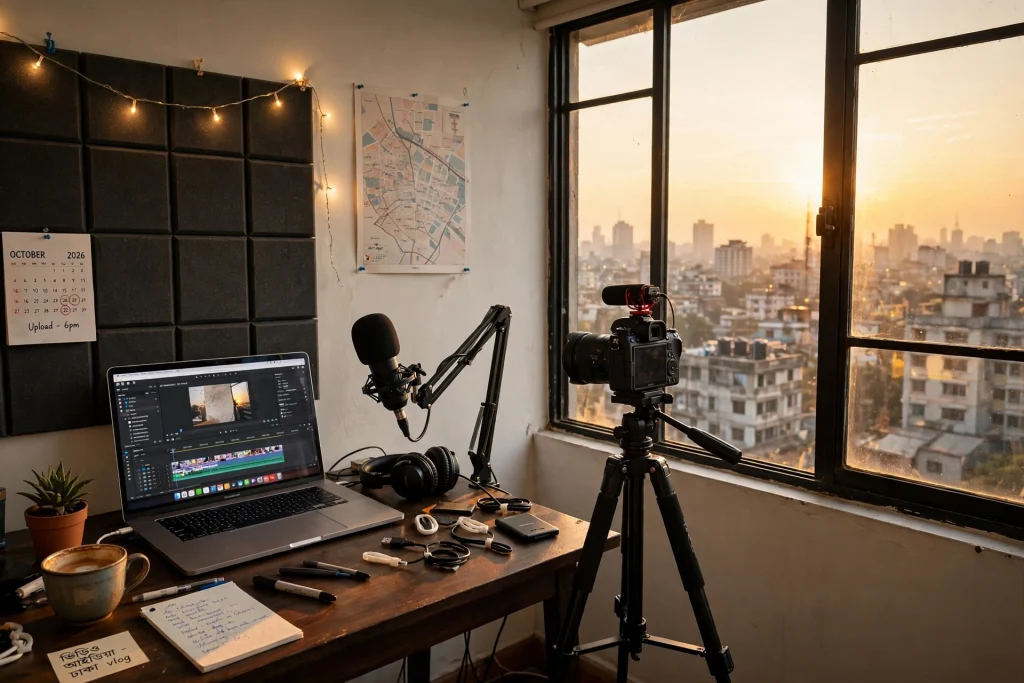
The Discipline of Showing Up
Everyone wants the result. Few want the routine. But here’s the truth I’ve learned across years of building: showing up is the whole game.
The short answer: results come from the routine, not from motivation. Showing up daily — especially on the days you don’t feel like it — beats talent, strategy, and inspiration over any long horizon. Discipline is just the decision to make the streak more important than the mood.
Not talent. Not motivation. Not the perfect strategy. Just the boring, unglamorous, daily discipline of showing up — especially on the days you don’t feel like it.
Motivation Is a Liar
Motivation feels important. It’s not. Motivation is a mood — it comes and goes with your energy, your sleep, the weather, a random comment someone made. Building your life on motivation is like building on sand.
I’ve had motivated days where I produced nothing. I’ve had unmotivated days where I published my best work. The correlation between how I feel and what I produce is basically zero.
What matters is the system that gets me to the desk regardless of mood. Discipline isn’t about feeling like it. It’s about doing it especially when you don’t feel like it.
I wrote about the consistency principle in Why Consistency Beats Talent Every Time. This is the deeper cut: consistency isn’t a trait, it’s a practice — the practice of showing up.
What "Showing Up" Actually Means
Showing up doesn’t mean performing at your peak every day. It means:
- Being present. Open the document. Start the camera. Begin the work. The first 10 minutes are the hardest; after that, momentum takes over.
- Doing the minimum viable version. Some days my “article” is 200 rough words. Some days my “video” is a 5-minute voice note. The output varies; the showing up doesn’t.
- Keeping the streak alive. Not for the streak itself — but because breaking the pattern makes it exponentially harder to restart. Miss one day, it’s an accident. Miss two, it’s a new habit.
- Lowering the bar on bad days. The goal isn’t excellence every day. It’s presence every day. Excellence emerges from presence over time.
The Days You Don't Want To
Let me be specific about the hard days, because that’s where discipline actually lives:
When you’re tired. After a full day at a job, the last thing you want is to create. I know — I built Superpreneur Bangladesh alongside full-time work. The answer isn’t willpower; it’s systems. Same time, same place, same trigger. Make showing up automatic so it doesn’t require a decision.
When nobody’s watching. Early on, my content got almost no views. Publishing into silence is demoralizing. But I kept showing up because the work was the point, not the applause. I wrote about this in How to Stay Consistent When Nobody’s Watching.
When you doubt yourself. Imposter syndrome, comparison, the voice that says “who are you to teach this?” Showing up despite doubt is the definition of courage. The doubt doesn’t go away — you just stop obeying it.
When life gets messy. Family issues, health problems, bad weeks. Discipline isn’t rigidity — sometimes showing up means 10 minutes instead of 2 hours. But it still means showing up.
Discipline vs. Punishment
Important distinction: discipline isn’t self-punishment. It’s self-respect.
Punishment says: “You’re lazy, force yourself.” Discipline says: “This matters to me, so I’ll honor the commitment.” One is driven by shame; the other by values.
I don’t show up because I’m afraid of falling behind. I show up because building is who I am. The identity drives the behavior, not the other way around. When “I’m a person who publishes weekly” becomes part of your identity, skipping feels wrong — not because of guilt, but because of incongruence.
How to Build the Discipline
Practical steps, from someone who’s built it:
- Shrink the commitment. Don’t commit to “write an article daily.” Commit to “open the document daily.” Make it so small you can’t say no. The work expands to fill the time once you start.
- Attach it to an existing habit. After morning tea, I write. The tea is the trigger. Find your trigger — after lunch, after the commute, whenever. Habit stacking works.
- Track it visibly. A calendar with X’s. A streak counter. Something you see daily. Not for perfection — for awareness. I track my publishing; the visual record keeps me honest.
- Have a “bad day” protocol. Decide in advance what you’ll do on terrible days. Mine: 15 minutes minimum, any quality. Having the protocol removes the decision when you’re weakest.
- Forgive fast, restart faster. You’ll miss days. The discipline isn’t in never missing — it’s in how quickly you return. Miss a day? Fine. The next morning, you’re back. No drama, no guilt spiral.
The Compound Proof
I’m writing my 95th article. That didn’t happen because of 95 bursts of motivation. It happened because of a discipline of showing up — week after week, through tired evenings, slow growth, doubt, and distraction.
Each article was just one showing-up. But 95 showings-up became a body of work. That’s the math of discipline: ordinary actions, repeated extraordinarily.
The same math applies to anything: fitness, learning, business, relationships. Show up. Keep showing up. Let compounding do the rest.
The Real Secret
Here’s what nobody tells you: discipline gets easier. The first 30 days are hard. The next 30 are easier. After a year, showing up isn’t discipline anymore — it’s just who you are.
The hard part isn’t the showing up. It’s the starting. So start today. Show up once. Then again tomorrow.
That’s the whole secret. There is no other secret.
—
*I show up every week on YouTube at @superpreneurbd — 214 videos and counting, built one showing-up at a time.*
Showing up daily only works if you can wait for it to matter. That waiting is not passive — patience is a business strategy, and it is the half of discipline nobody talks about.